
Introduction
Choosing the right software can be overwhelming. With thousands of tools available, each promising to be the best, how do you know which one fits your needs? This is where a software comparison review becomes invaluable. By examining features, pricing, usability, and performance, you can make a well-informed decision without wasting time or money.
A Software Comparison Review is not just about listing features. It involves analyzing usability, reliability, customer support, integration capabilities, and long-term value. Whether you are a beginner looking for a simple tool or an intermediate user seeking advanced functionality, understanding the differences between software options ensures you select the right solution.
What is Software Comparison Review?
A software comparison review is an evaluation process where multiple software tools are analyzed side by side. This process highlights the strengths, weaknesses, costs, usability, and features of each option. It is designed to help users select the most suitable tool for their unique needs.
The review typically covers aspects such as:
- Features and functionality: What the software can do and whether it meets your specific requirements.
- Ease of use: How intuitive and user-friendly the software is.
- Pricing: Cost-effectiveness and value for money.
- Integration: Compatibility with other tools or systems you use.
- Customer support: Availability and quality of technical help.
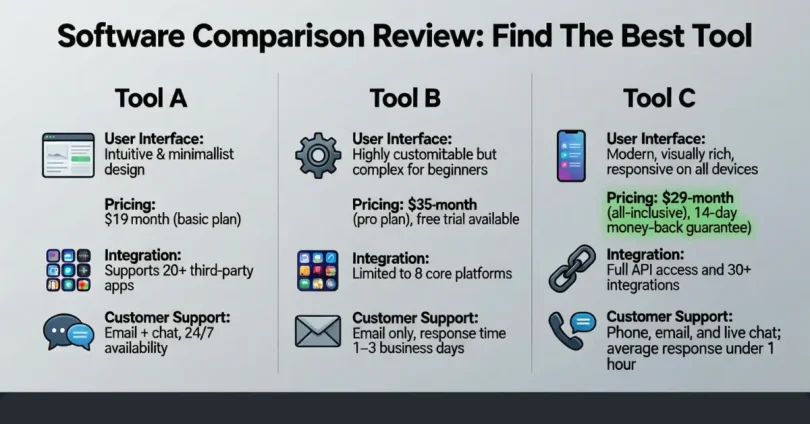
For example, if you are comparing two project management tools, a software comparison review will detail how each handles task assignments, reporting, collaboration, and mobile access.
The main goal is to simplify the decision-making process. Instead of trial and error, you get a clear picture of which software aligns with your goals.
Why is Software Comparison Review Important?
Selecting the wrong software can lead to wasted time, lost productivity, and unnecessary expenses. A software comparison review is crucial because it ensures you make an informed choice based on facts rather than marketing claims. Here are the primary reasons why it is important:
- Saves Time: You avoid testing multiple tools blindly. A review consolidates information for easy comparison.
- Reduces Costs: Choosing the right software from the start prevents unnecessary purchases.
- Improves Productivity: The best-fit software enhances workflow efficiency.
- Identifies Limitations: A review exposes potential weaknesses before investing.
- Informs Long-Term Decisions: Helps evaluate software scalability as your business or personal needs grow.
For instance, a small business owner may need accounting software that is simple, affordable, and easy to integrate with other tools. A software comparison review quickly reveals which options meet these criteria, saving both money and time.
Detailed Step-by-Step Guide
Conducting a software comparison review may seem complicated, but following a systematic approach makes it manageable. Below is a step-by-step guide to help you evaluate any software effectively.
Step 1: Identify Your Needs
Before comparing software, define your requirements clearly. Consider:
- The tasks you need to complete
- Number of users who will use the software
- Budget constraints
- Required integrations with existing tools
Example: A content marketer may need a tool for SEO analysis, keyword tracking, and content optimization.
Step 2: List Available Options
Make a list of potential software solutions. Use online resources, recommendations, or industry reviews to compile at least 5–10 options.
Step 3: Define Evaluation Criteria
Establish clear criteria for comparison, such as:
- Features and functionality
- Ease of use
- Price and licensing model
- Performance and reliability
- Customer support
- Security and compliance
Step 4: Gather Information
Collect data from:
- Official software websites
- User reviews on trusted platforms
- Demo versions or free trials
- Expert reviews and testimonials
Step 5: Conduct Hands-On Testing
If possible, test the software yourself. Observe:
- How intuitive the interface is
- Speed and responsiveness
- Any recurring bugs or issues
- Learning curve for beginners
Step 6: Compare Features Side by Side
Create a comparison chart. Include:
| Feature | Software A | Software B | Software C |
| Task Management | Yes | No | Yes |
| Integration | Limited | Full | Moderate |
| Pricing | $29/mo | $49/mo | $39/mo |
Step 7: Analyze Costs vs. Benefits
Evaluate whether the features justify the price. Sometimes, a slightly more expensive tool offers long-term value due to better performance or advanced functionality.
Step 8: Check Customer Support and Resources
Reliable customer support is essential. Check:
- Response time
- Availability (24/7 or business hours)
- Help documentation and tutorials
Step 9: Make Your Decision
Based on your evaluation, select the software that best matches your needs, budget, and long-term goals.
Benefits of Software Comparison Review
Performing a software comparison review offers numerous advantages:
- Informed Decision-Making: Helps you choose software based on facts, not marketing claims.
- Time Efficiency: Reduces trial-and-error testing of multiple tools.
- Cost-Effectiveness: Avoids unnecessary spending on unsuitable software.
- Better Productivity: Ensures you use a tool that streamlines tasks efficiently.
- Scalability: Identifies software that can grow with your needs.
- Enhanced Confidence: Gives peace of mind that your choice is well-researched.
Disadvantages / Risks
While software comparison reviews are highly beneficial, they also have some limitations:
- Time-Consuming: Gathering information and testing multiple tools can take time.
- Bias Risk: Some reviews may be influenced by marketing or sponsorships.
- Information Overload: Too many options may overwhelm beginners.
- Rapid Changes: Software updates can make reviews outdated quickly.
- Incomplete Data: Limited access to certain features may prevent full evaluation.
Being aware of these risks ensures you approach reviews critically and make balanced decisions.
Common Mistakes to Avoid
Even with a systematic approach, beginners often make mistakes in software comparison reviews. Avoid these pitfalls:
- Ignoring User Needs: Choosing software based solely on features, not actual requirements.
- Overlooking Hidden Costs: Failing to account for subscription fees, add-ons, or upgrades.
- Relying Only on Marketing: Believing product claims without testing or research.
- Neglecting Scalability: Selecting software that cannot grow with your needs.
- Skipping Trials: Not using demo or trial versions to evaluate usability.
- Focusing Only on Price: Cheaper software may lack critical features, reducing long-term value.
- Ignoring Support: Underestimating the importance of reliable customer service.
By avoiding these mistakes, you can conduct a more accurate and useful software comparison review.
FAQs
1. What is the purpose of a software comparison review?
A software comparison review helps users evaluate multiple software options to determine which tool best meets their needs. It simplifies decision-making and saves time and money.
2. How do I start a software comparison review?
Start by identifying your needs, creating a list of potential software, defining evaluation criteria, and gathering information through trials, reviews, and demos.
3. What features should I prioritize in a software comparison review?
Focus on usability, functionality, pricing, integration, performance, customer support, and security. These factors influence long-term value and efficiency.
4. Can a software comparison review be biased?
Yes. Some reviews may be influenced by sponsorships or marketing. Always cross-check multiple sources and, if possible, test software personally.
5. How do I compare pricing effectively?
Consider all costs, including subscription fees, add-ons, maintenance, and long-term value. A cheaper tool may be more expensive in the long run if it lacks essential features.
6. Is it necessary to use free trials for comparison?
Absolutely. Hands-on testing allows you to evaluate usability, speed, and features that reviews may not fully describe.
7. How often should I perform a software comparison review?
Whenever your needs change, or when software is updated with new features, it is wise to revisit your comparison to ensure you are still using the best tool.
8. Are software comparison reviews only for businesses?
No. Individuals, freelancers, and hobbyists can benefit as much as businesses by selecting tools that save time, money, and effort.
Expert Tips & Bonus Points
- Use Weighted Scoring: Assign scores to each criterion to objectively compare software.
- Check Integration Options: Ensure the software works with your current tools for seamless workflow.
- Prioritize User Experience: A highly functional tool is useless if it is difficult to use.
- Look for Community Support: Active forums and communities can help solve problems quickly.
- Track Updates: Regular software updates indicate reliability and ongoing support.
- Test Multiple Users: If software will be used by a team, involve them in testing to get real feedback.
- Consider Security: Especially for sensitive data, ensure the software follows industry-standard security protocols.
Bonus Tip: Document your comparison process. Creating a simple chart or table will make future evaluations easier and more organized.
Conclusion
A software comparison review is an essential step for anyone looking to select the right tool efficiently. By systematically analyzing features, usability, cost, and support, you reduce risks and improve productivity. The process ensures you make decisions based on facts rather than marketing hype or assumptions.
Whether you are a beginner exploring basic tools or an intermediate user seeking advanced features, a thoughtful comparison saves time, money, and effort. Remember to define your needs clearly, evaluate software hands-on, consider long-term scalability, and involve stakeholders if applicable. Avoid common mistakes like ignoring user needs or overlooking hidden costs, and use expert tips like weighted scoring and checking community support.