
Introduction
Encountering errors in daily life, whether on a computer, smartphone, or during routine tasks, can be frustrating. These errors can range from simple mistakes in software to common issues in day-to-day activities. Learning How To Fix Common Errors is essential for saving time, reducing stress, and maintaining productivity. The good news is that most errors are solvable with basic troubleshooting techniques and some practical knowledge.
Many beginners often feel overwhelmed when facing errors. They may not know where to start or which method is reliable. In reality, most common errors have straightforward solutions that anyone can implement. By understanding the root causes and following a structured approach, you can fix issues efficiently and avoid repeating the same mistakes.
What is How to Fix Common Errors?
How to fix common errors is a systematic approach to identifying, understanding, and resolving frequent mistakes that occur in everyday life, technology, or work environments. These errors can be software-related, human errors, or procedural mistakes that interrupt smooth functioning.
For example, on a computer, common errors may include software crashes, network connectivity issues, or printer malfunctions. In daily tasks, errors can involve missed deadlines, miscommunications, or incorrectly completed forms. Learning how to fix common errors involves recognizing the problem, understanding the cause, and applying the correct solution.
The process typically includes:
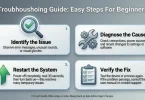
- Identifying the problem: Recognizing the error as soon as it occurs.
- Analyzing the cause: Determining why the error happened.
- Applying a solution: Implementing a fix based on reliable methods.
- Verifying results: Ensuring the error does not reoccur.
By mastering this approach, you can reduce the time and effort needed to correct mistakes. It also enhances your ability to prevent errors in the future. Understanding how to fix common errors is not just a technical skill; it’s a practical life skill that applies to multiple areas, including technology, work, and personal tasks.
Why is How to Fix Common Errors Important?
Knowing how to fix common errors is vital for several reasons:
- Saves Time and Effort
Errors, if not addressed quickly, can consume significant time. Knowing how to fix them promptly reduces downtime and allows you to focus on important tasks. - Increases Productivity
Mistakes disrupt workflow. By efficiently resolving issues, you maintain productivity and achieve goals faster. - Reduces Stress
Facing an error without a solution can be frustrating. Understanding the fix brings calmness and control. - Improves Skills
Learning error resolution improves problem-solving, analytical thinking, and technical proficiency. - Prevents Recurring Issues
Once you know the cause and solution, you can prevent the same error from happening again, saving future headaches. - Enhances Confidence
Being able to fix errors independently boosts confidence in handling both routine and unexpected problems.
Errors are inevitable, but knowing how to handle them efficiently sets successful individuals apart from those who struggle. It is a skill that benefits both personal and professional life.
Detailed Step-by-Step Guide
Here’s a complete guide on how to fix common errors using practical, step-by-step methods. We will cover different types of errors and solutions for beginners and intermediate users.
Step 1: Identify the Error
Before fixing anything, you need to know what went wrong. Common ways to identify errors include:
- Observing error messages on devices or software
- Noticing unusual behavior (slow performance, crashes, incorrect outputs)
- Listening to alerts or notifications
- Reviewing recent actions that may have caused the issue
Example: If your computer displays “Network not detected,” the error is related to connectivity.
Step 2: Analyze the Cause
Understanding why an error occurred is crucial. Some common causes include:
- Software glitches: Outdated applications or corrupted files
- User mistakes: Incorrect settings or commands
- Hardware issues: Faulty devices or connections
- Network problems: Slow internet or misconfigured routers
- Procedural errors: Skipping steps in a process
Tip: Take note of patterns. If an error repeats after a specific action, that action is likely the cause.
Step 3: Apply Basic Fixes
Many common errors have simple solutions:
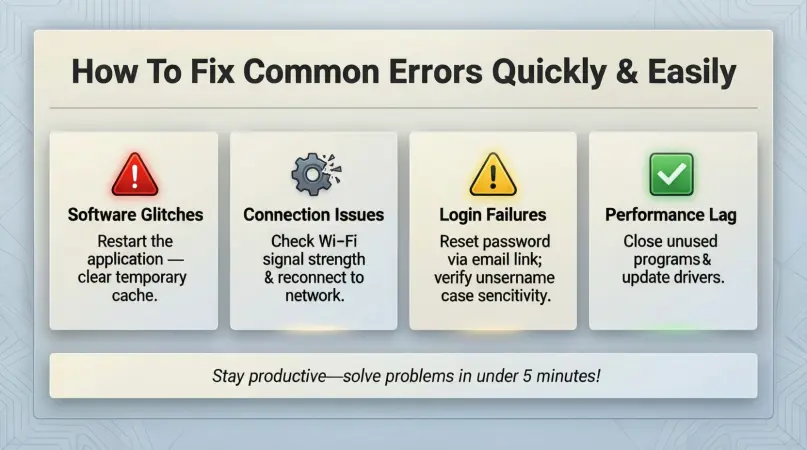
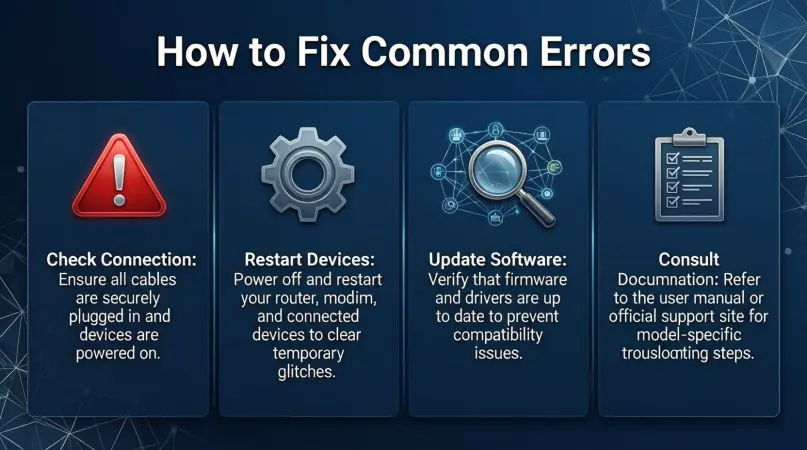
Restart the Device or Application
- Often, a quick restart resolves temporary glitches.
Update Software or Drivers
- Outdated programs frequently cause errors. Updating ensures compatibility and stability.
Check Connections
- Loose cables, disconnected networks, or malfunctioning peripherals can trigger errors.
Clear Cache and Temporary Files
- These files can accumulate and cause slow performance or errors.
Undo Recent Changes
- Reverting to previous settings or uninstalling recent updates can fix unexpected issues.
Example: A printer showing a “Paper Jam” error can often be fixed by removing the jammed paper and restarting the device.
Step 4: Use Advanced Troubleshooting (If Needed)
If basic fixes fail, more detailed troubleshooting may be required:
- Run diagnostic tools: Most devices have built-in troubleshooting features.
- Check logs and error codes: Error codes provide clues for targeted solutions.
- Safe Mode: Starting a system in safe mode isolates software conflicts.
- System restore: Restoring to an earlier state can undo problematic changes.
Example: For persistent computer errors, running Windows’ built-in troubleshooter or macOS’ Disk Utility can detect and repair underlying issues.
Step 5: Verify the Solution
After applying a fix, confirm that the error is resolved:
- Test the affected device, software, or process
- Observe for repeated issues over time
- Document the solution for future reference
Tip: Keeping a small log of errors and fixes helps in quickly resolving similar problems in the future.
Step 6: Prevent Future Errors
Once the error is fixed, prevention is key:
- Regularly update software and hardware
- Back up important data
- Follow standard procedures carefully
- Use antivirus or security tools to prevent malware-related errors
- Monitor systems periodically for early warning signs
Benefits of How to Fix Common Errors
Learning how to fix common errors has multiple advantages:
- Saves time: Quickly addresses problems without waiting for external help
- Reduces stress: Eliminates frustration caused by recurring issues
- Improves technical skills: Builds confidence in troubleshooting
- Enhances productivity: Keeps systems and tasks running smoothly
- Prevents data loss: Avoids costly mistakes by fixing errors early
- Boosts problem-solving ability: Develops analytical thinking
- Empowers independence: Reduces reliance on external support
Disadvantages / Risks
While fixing errors is beneficial, there are some potential risks:
- Incorrect fixes can worsen the problem
- Data loss if proper backups aren’t made
- Time-consuming for complex errors
- May require technical knowledge for advanced troubleshooting
- Overconfidence can lead to skipping necessary expert help
Understanding these risks ensures that you approach error resolution carefully and responsibly.
Common Mistakes to Avoid
When learning how to fix common errors, avoid these pitfalls:
- Ignoring the problem until it worsens
- Guessing solutions without analyzing the cause
- Skipping backups before major fixes
- Applying online solutions blindly
- Not documenting the fix for future reference
- Assuming all errors are the same
- Overlooking preventive measures
Being cautious and methodical reduces the chance of compounding the error.
FAQs
1. What are the most common errors beginners face?
Beginners often encounter software crashes, connectivity issues, slow devices, misconfigured settings, and simple procedural mistakes. Recognizing patterns helps fix these errors faster.
2. Can most errors be fixed without professional help?
Yes, many common errors have simple solutions like restarting devices, updating software, or checking connections. Complex issues may require professional assistance.
3. How can I prevent errors in the future?
Regular maintenance, careful following of procedures, software updates, backups, and monitoring systems are effective ways to prevent recurring errors.
4. What tools can help in fixing common errors?
Built-in diagnostic tools, error logs, system restore features, antivirus programs, and troubleshooting guides are highly useful.
5. How long does it take to fix common errors?
Simple errors can take minutes to resolve, while complex issues may require hours. The key is systematic troubleshooting rather than rushing solutions.
6. Is it safe to use online solutions for error fixes?
Only use trusted sources. Some online solutions may worsen the problem or introduce malware. Always verify steps and backup data before applying fixes.
7. Why do errors keep recurring even after fixing?
Recurring errors may be caused by unresolved root issues, outdated software, or repeated mistakes. Thorough analysis and preventive measures are necessary.
8. Can fixing errors improve overall productivity?
Absolutely. Resolving errors promptly keeps systems functioning smoothly, prevents downtime, and allows more focus on essential tasks.
Expert Tips & Bonus Points
- Document solutions: Keep a log of errors and fixes to handle similar issues faster in the future.
- Stay updated: Regular updates reduce software-related errors.
- Use preventive maintenance: Clean devices, optimize systems, and scan for malware.
- Ask for help wisely: If unsure, consult experts to avoid worsening the problem.
- Stay calm: Panicking can lead to hasty, ineffective solutions.
Bonus Tip: Practice proactive troubleshooting. Regularly check for small issues before they become major problems. Small, consistent efforts save significant time and effort later.
Conclusion
Learning how to fix common errors is an essential skill for beginners and intermediate users. Errors are a natural part of using technology, performing tasks, and managing everyday responsibilities. By following a structured approach—identifying the problem, analyzing causes, applying solutions, verifying results, and preventing recurrence—you can tackle issues efficiently and confidently.
The ability to fix errors not only saves time but also reduces stress, improves productivity, and strengthens problem-solving skills. While some errors may be complex, most common mistakes have simple, practical solutions that anyone can implement. Avoiding common mistakes, documenting fixes, and following preventive measures ensures long-term success in managing errors.