
Introduction
Are you new to learning new skills but don’t know where to start? If yes, How To Guides For Beginners are the perfect solution for you. They are simple, step-by-step instructions designed to help anyone, regardless of experience, understand and implement a task. Whether you want to learn cooking, gardening, blogging, or even basic computer skills, beginner-friendly guides make the process easy and enjoyable.
Starting something new can feel overwhelming. Often, people quit before they even begin because the steps seem complicated or unclear. This is where how to guides for beginners come in. They break down complex tasks into manageable actions and explain them in plain, simple language. Unlike traditional manuals or tutorials that may assume prior knowledge, these guides focus on absolute beginners and gradually increase complexity as you progress.
What is How to Guides for Beginners?
How to guides for beginners are instructional resources designed to help people learn new skills or complete tasks from scratch. Unlike advanced tutorials or technical manuals, these guides use simple language, visual aids, and clear instructions tailored for those with little to no prior experience.
The main goal of beginner guides is to make learning accessible. They typically include:
- Step-by-step instructions
- Clear examples
- Tips and warnings for common mistakes
- Practical exercises to reinforce learning
For instance, if you want to start blogging, a beginner guide will walk you through choosing a platform, setting up your website, writing your first post, and promoting it effectively. The guide ensures you don’t get lost in technical jargon and feel supported throughout the learning process.
Why is How to Guides for Beginners Important?
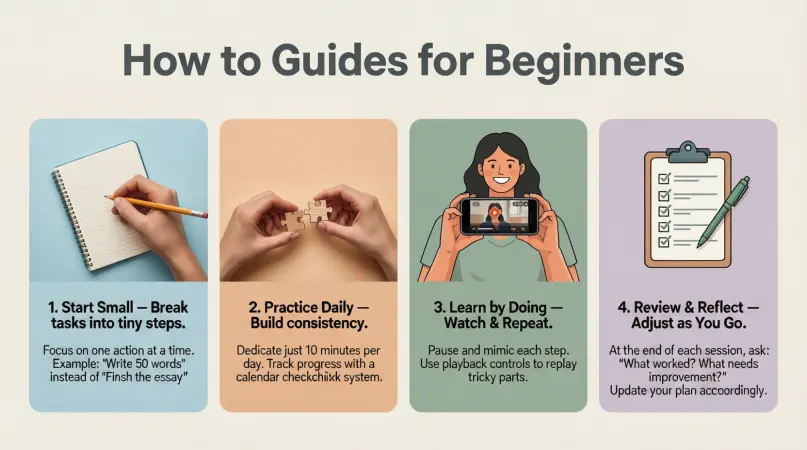
How to guides for beginners are important for several reasons:
- Simplifies Complex Tasks – Many tasks seem difficult until broken down into small steps. Beginner guides remove complexity.
- Builds Confidence – Step-by-step instructions make you feel capable and reduce the fear of starting.
- Saves Time – Rather than learning through trial and error, guides provide a proven path to follow.
- Reduces Mistakes – Guides often include warnings and tips that prevent common errors.
- Encourages Continuous Learning – Once beginners see results, they are motivated to learn more advanced skills.
For example, learning to cook without guidance can be intimidating. A beginner guide shows the process of chopping, measuring, and cooking in an organized manner, making the experience enjoyable rather than stressful.
Detailed Step-by-Step Guide
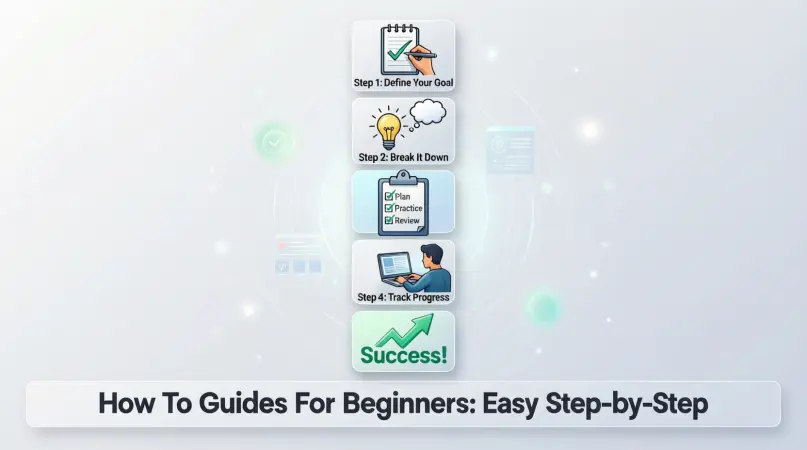
Creating a how to guide for beginners involves several key steps. Let’s break them down into actionable points.
Step 1: Identify the Skill or Task
The first step is to clearly define what you want to learn or accomplish. Ask yourself:
- What am I trying to achieve?
- Do I have any prior knowledge of this topic?
- What tools or resources do I need?
Example: If you want to start digital marketing, your task could be “setting up a basic social media campaign.”
Step 2: Research and Gather Information
Even beginner guides require accurate and useful information. Research your topic thoroughly by:
- Reading books, articles, or tutorials
- Watching expert videos
- Checking credible online sources
Example: For gardening, research the right soil types, plant species, and watering techniques suitable for beginners.
Step 3: Break Down the Task
Divide your task into smaller, manageable steps. This makes learning less overwhelming.
For example, if your goal is creating a personal website:
- Choose a website builder
- Pick a domain name
- Select a theme
- Create basic pages
- Publish content
Breaking it down ensures you focus on one thing at a time.
Step 4: Write Clear Instructions
Use simple language and short sentences. Each step should be easy to follow. Include:
- Action verbs (e.g., “click,” “type,” “cut”)
- Step numbers or bullet points
- Visual aids or examples if possible
Example: Instead of saying, “Optimize your blog,” say, “Write a title under 60 characters and include one main keyword.”
Step 5: Include Tips and Warnings
Beginner guides are more helpful when they include:
- Common mistakes to avoid
- Pro tips for better results
- Warnings about difficult steps
Example: In cooking, a tip could be: “Always preheat your oven to ensure even baking.”
Step 6: Test the Guide Yourself
Before sharing, follow your guide step by step as if you were a complete beginner. Adjust anything that seems unclear or difficult.
Step 7: Review and Update
Information can change, especially online. Review your guide periodically and update it with new insights, tools, or techniques.
Step 8: Share Your Guide
Once complete, share your guide on platforms where beginners can access it easily, such as blogs, social media, or forums.
Benefits of How to Guides for Beginners
Using or creating beginner guides offers numerous advantages:
- Easy Learning – Simplifies complicated topics
- Boosts Confidence – Clear steps help build self-esteem
- Saves Time and Effort – Reduces trial and error
- Enhances Skill Retention – Step-by-step learning improves memory
- Encourages Consistency – Structured learning promotes habit formation
- Accessible Anywhere – Online guides allow learning from home
- Motivates Further Learning – Seeing progress encourages continued growth
Disadvantages / Risks
While beginner guides are highly useful, there are some potential downsides:
- Oversimplification – Important details may be skipped
- Dependency – Beginners may rely too much on guides
- Outdated Information – Some guides may not reflect current trends
- Limited Personalization – Guides may not suit all learning styles
- Risk of Misinterpretation – Instructions may be misunderstood
Being aware of these risks helps you use guides effectively without relying on them blindly.
Common Mistakes to Avoid
When using or creating how to guides for beginners, avoid these pitfalls:
- Skipping Steps – Always include every essential step.
- Using Technical Jargon – Beginners need simple, plain language.
- Ignoring Visual Aids – Diagrams, images, or videos improve understanding.
- Not Testing Instructions – Unverified steps can confuse learners.
- Overloading Information – Keep steps concise and manageable.
- Neglecting Updates – Regularly refresh content to stay relevant.
FAQs
1. What is the best way to use a beginner guide?
Start by reading the entire guide once. Then follow it step by step, practicing each action before moving to the next.
2. Can beginner guides replace formal learning?
Not entirely. They are excellent for starting but may lack depth. Use them alongside courses or mentorship for full mastery.
3. How long does it take to learn from a beginner guide?
It depends on the complexity of the topic and your dedication. Some guides can be completed in hours, others may take weeks.
4. Are online beginner guides reliable?
Most are, but check the source. Look for guides from experts, credible websites, or verified authors.
5. Should beginner guides include examples?
Yes, examples make instructions clearer and help learners understand practical applications.
6. How often should a beginner guide be updated?
Ideally, every 6–12 months, or whenever new tools, techniques, or best practices emerge.
7. Can beginner guides be used for professional skills?
Absolutely. Many professionals start learning new tools or software using beginner guides before moving to advanced resources.
8. What is the difference between a beginner guide and a tutorial?
Beginner guides focus on foundational steps for those with no prior experience, while tutorials may assume some knowledge and move faster.
Expert Tips & Bonus Points
- Start Small – Focus on one task at a time rather than multiple skills simultaneously.
- Practice Regularly – Consistent practice is more effective than long, occasional sessions.
- Use Multiple Guides – Comparing different beginner guides can provide diverse perspectives.
- Take Notes – Writing down key points helps retain information.
- Ask Questions – Engage with communities or forums if a step is unclear.
- Set Realistic Goals – Don’t rush; celebrate small achievements.
- Combine Theory and Practice – Apply learned concepts immediately for better retention.
- Keep Updated Tools Ready – Ensure you have all necessary tools or apps before starting.
Bonus Tip: Record your progress or create your own guide as you learn. Teaching a skill reinforces understanding.
Conclusion
Learning something new doesn’t have to be intimidating. How to guides for beginners make it simple, practical, and enjoyable. By breaking tasks into clear steps, providing tips, and avoiding common mistakes, these guides empower anyone to start a new skill with confidence.
The key to success is consistency and patience. Start with small achievable steps, practice regularly, and don’t hesitate to revisit instructions when needed. Over time, beginner guides can become stepping stones to advanced learning, enabling you to take on more complex projects with ease.